Inside the Louvre's €800 Million Plan to Give the Mona Lisa Her Own Room
Section: Arts
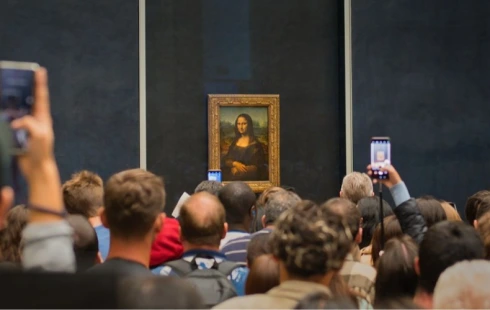
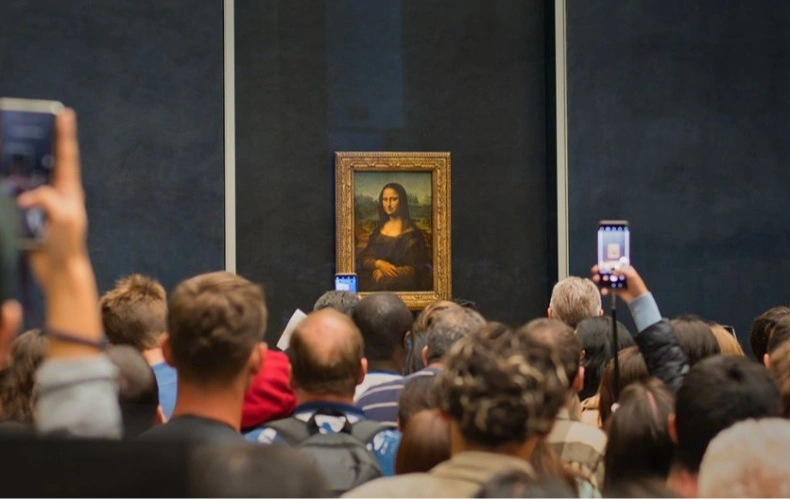
Standing beside the painting itself in January 2025, French President Emmanuel Macron unveiled a decade-long renovation plan for the world's most-visited museum, named Louvre Nouvelle Renaissance. The centerpiece: the Mona Lisa will move into a new, independently accessible and separately ticketed room, built beneath the Cour Carrée, allowing visitors who specifically want to see the painting to do so without navigating the rest of the museum's crowded galleries first.
The announcement followed a leaked internal memo from the Louvre's president-director, Laurence des Cars, to France's culture minister, flagging what she described as increasingly degraded gallery spaces, outdated technical infrastructure, and temperature swings serious enough to threaten the conservation of the artworks themselves. The museum welcomed nearly 9 million visitors in 2024 80 percent of them foreign tourists well above the roughly 10 million it saw annually before the pandemic and far beyond what its 1980s-era infrastructure was built to handle.
Alongside the Mona Lisa's relocation, the project includes a new "grand entrance" on the museum's eastern façade, at the Colonnade de Perrault, intended to relieve pressure on the glass pyramid that currently funnels most visitors in and out. The pyramid's greenhouse-like design has long been a practical complaint among visitors and staff alike during Paris summers, in addition to amplifying noise inside the entrance hall. An international architectural competition for the new entrance was set to launch in late 2025, with the full project targeting completion by 2031.
Macron was explicit that the renovation would be funded through the museum's own resources ticket sales, sponsorships, and licensing revenue from the Louvre Abu Dhabi agreement rather than direct taxpayer funding. Part of that funding strategy is already visible to visitors: starting in January 2026, non-EU visitors began paying a higher entry price than EU residents, a two-tier pricing structure the government has signaled it wants to extend to other national museums and monuments as well.
Some art critics have drawn a direct line between this project and the recently completed restoration of Notre-Dame, destroyed by fire in 2019 and reopened to considerable global attention. Whatever the political motivation, the practical comparison is a useful one for visitors: the Louvre project is explicitly framed as being on a similar scale and ambition, a "New Renaissance" for a museum its own director has publicly acknowledged is showing its age including, memorably, a 2016 Seine flood that forced an emergency overnight evacuation of tens of thousands of artworks stored in the museum's basement.
For residents and visitors planning to see the Mona Lisa in the coming years, a few practical points are worth keeping in mind. The painting isn't moving immediately the new gallery beneath the Cour Carrée is part of a project running through 2031, so current viewing conditions in the Salle des États will likely persist for at least the next several years, crowds included. The ticket price difference introduced for non-EU visitors in January 2026 already affects anyone planning a Louvre visit today, regardless of the longer renovation timeline, so it's worth checking current pricing directly on the museum's official site before a visit. And once the dedicated Mona Lisa room does open, expect a separate ticket to be required for that space specifically a change aimed squarely at reducing the crush that has become almost as famous as the painting itself.
Sources: NPR reporting on President Macron's January 2025 announcement; the Louvre's official website; ArtDependence and Finestre sull'Arte coverage of the Nouvelle Renaissance project details.
Photo by Grzegorz Lewandowski on Pexels
Section: Arts
Section: Travel

Section: Fashion

Section: Health
Section: Politics

Section: News

Section: Business

Section: Politics

Section: Business

Section: Business
Both private Health Insurance in Germany and public insurance, is often complicated to navigate, not to mention expensive. As an expat, you are required to navigate this landscape within weeks of arriving, so check our FAQ on PKV. For our guide on resources and access to agents who can give you a competitive quote, try our PKV Calculator.
Germany is famous for its medical expertise and extensive number of hospitals and clinics. See this comprehensive directory of hospitals and clinics across the country, complete with links to their websites, addresses, contact info, and specializations/services.
Didn't manage to get a ticket for Linkin Park? Or still not enough after the concert? Join us at CRASH on June 12th for our "IN THE END" Linkin Park Special + CORE NIGHT.All night long, we'll be playing Linkin Park's music, along with Nu Metal, Metalcore, and Alternative Rock from bands such as Limp...


No comments yet. Be the first to comment!