Afghan Girls Secretly Continue Their Education Under Taliban School Ban
Section: News
More than five years after the Taliban returned to power in Afghanistan, thousands of girls barred from formal secondary education are still finding ways to keep learning, often in secret, at informal schools and through online programs that operate in a legal gray zone.
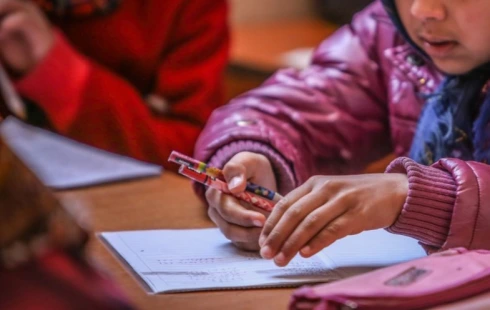
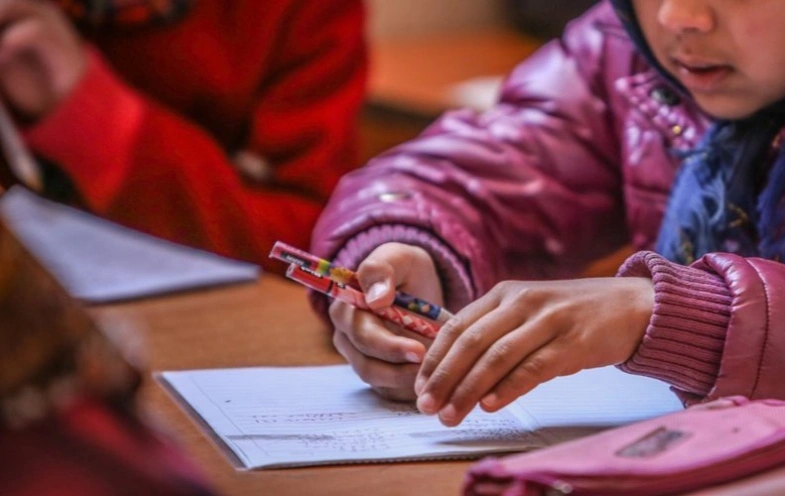
At one facility whose location cannot be disclosed for safety reasons, the scene looks like an ordinary Afghan school. After lessons end, children and older girls wearing white headscarves run across the courtyard. The school's director, speaking only on condition of anonymity, said she fears the Taliban will discover what is happening there. "Then they might close our school," she told the German Press Agency.
The Taliban seized control of Afghanistan in August 2021. At the time, senior Taliban officials said women would retain access to education. Schools closed during the coronavirus pandemic were expected to reopen on September 18 of that year. But the reopening for girls above sixth grade was first postponed, then suspended indefinitely.
Since then, 2.6 million girls have been shut out of secondary schooling, the United Nations children's agency UNICEF reported a month ago. The agency said Afghanistan is the only country in the world where women and girls are explicitly barred from higher education.
Yet at the school that appears so ordinary from the outside, instruction for girls continues quietly beyond sixth grade. Students, teachers and administrators agreed to speak with the German Press Agency only under condition of anonymity, citing the risk of exposure.
English classes offered at the school carry particular risk under Taliban rule, according to staff there. Still, the teacher who runs the course said the subject remains essential. She said the electronic devices she uses every day are set to English, adding, "in the age of artificial intelligence, we all simply need to know English."
The school also offers training in cosmetology and tailoring. Beauty salons have effectively been banned as a business for women in Afghanistan. But one student said she did not want to waste her time and wanted to learn something, whatever the constraints. Such vocational courses are not necessarily prohibited outright across the country, though enforcement often depends on how local Taliban officials choose to interpret the rules.
When questioned about the restrictions on women's education, Taliban government officials have repeatedly pointed to what they describe as Islamic values. Abdul Qahar Balkhi, a spokesman for the Taliban's foreign ministry, addressed the policy in an interview with the American broadcaster CBS News on Tuesday. He said the suspension of higher secondary and university education for women and girls does not amount to a denial of their right to basic schooling. Balkhi said home instruction, online classes and religious schools remain permitted under current rules.
That gray area has created some room to maneuver for organizations working outside Afghanistan. The Cologne-based Anar Academy runs online classes covering the standard curriculum for grades seven through twelve for Afghan girls. Benazir Poya, who heads the academy, said more than 1,400 students across the country enrolled in the program this year.
Poya said many students are unable to finish the courses. Common obstacles include unreliable internet access and the broader economic hardship facing families across Afghanistan, which she said often forces girls to abandon their studies before completion.
UNICEF has continued to press for the restoration of secondary and university access for Afghan girls and women, citing the scale of the exclusion in its assessment released last month. The agency's figures cover girls who have been barred from attending school beyond the sixth grade since the policy took effect.
Photo by Mehdi Khoshnejad on Pexels
Section: News

Section: Business

Section: Politics

Section: Business
Section: Business

Section: Arts

Section: News

Section: Business

Section: News
Section: Business
Health Insurance in Germany is compulsory and sometimes complicated, not to mention expensive. As an expat, you are required to navigate this landscape within weeks of arriving, so check our FAQ on PKV. For our guide on resources and access to agents who can give you a competitive quote, try our PKV Cost comparison tool.
Germany is famous for its medical expertise and extensive number of hospitals and clinics. See this comprehensive directory of hospitals and clinics across the country, complete with links to their websites, addresses, contact info, and specializations/services.
Didn't manage to get a ticket for Linkin Park? Or still not enough after the concert? Join us at CRASH on June 12th for our "IN THE END" Linkin Park Special + CORE NIGHT.All night long, we'll be playing Linkin Park's music, along with Nu Metal, Metalcore, and Alternative Rock from bands such as Limp...



No comments yet. Be the first to comment!