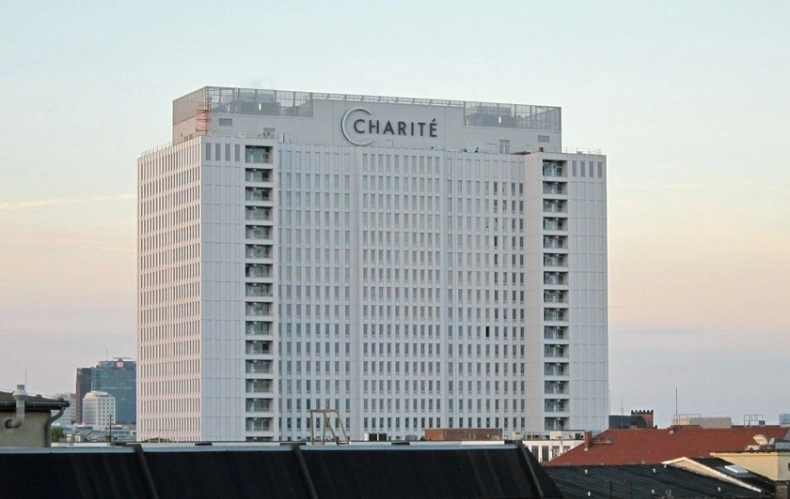
Nursing strike at Berlin's Charité hospital disrupts care beyond its own wards
Section: Health
Berlin's central district of Mitte remains without a newly confirmed mayor after talks between the Greens and the Left party on forming a governing alliance broke down last week, prompting the Greens to open negotiations with the small party Volt instead.
A green-left alliance had widely been seen as the most straightforward path to forming a majority in the district assembly following the most recent local elections. That option has not materialized, leaving the question of who will lead the district unresolved weeks after voters went to the polls.
The Left party's district branch in Mitte announced on Thursday that discussions with the Greens over a so-called Zählgemeinschaft, the informal voting alliances German district assemblies use to secure majorities for mayoral and deputy posts, had collapsed. In a statement, the party said the negotiations had "failed for now," a phrase used by the Mitte branch under its co-chair, Martha Kleedörfer.
The statement did not elaborate in detail on what triggered the breakdown, but it signaled that the two parties, which had been expected to form the backbone of a new district government, are no longer actively working toward a joint arrangement, at least for the time being.
In the wake of that announcement, the Greens have shifted their focus toward Volt, a smaller, pro-European party that has steadily gained a foothold in Berlin district politics in recent years. The two parties are now in talks aimed at building a workable alliance that could secure the votes needed to install a mayor and fill other key district posts.
Volt's involvement marks a notable turn in the Mitte negotiations. Although the party holds only a limited number of seats in the district assembly, its support could prove decisive in a chamber where no single faction commands an outright majority and where coalition arithmetic has grown increasingly complicated since the Left's withdrawal from talks with the Greens.
The Left party, for its part, has not ruled out further political maneuvering of its own. According to the district branch's statement, the party is simultaneously exploring other options for its own role in a future district administration, even as its main talks with the Greens have stalled.
The developments leave Mitte, one of Berlin's most politically significant districts and home to the seat of the federal government, without clarity on its executive leadership. District mayors and deputy mayors in Berlin are elected by the Bezirksverordnetenversammlung, the locally elected assembly, rather than directly by voters, which makes the formation of stable voting blocs essential to filling those posts.
The stalled negotiations underscore the fragmented nature of Mitte's current political landscape, where traditional alliances between left-leaning parties can no longer be taken for granted. Shifts in voter support in recent district elections have made it harder for any one bloc to assemble a majority without pulling in smaller players such as Volt.
It remains unclear how long the new round of talks between the Greens and Volt will take, or whether the Left party might eventually rejoin discussions if its own exploration of alternatives does not yield a viable path to office. Neither the Greens nor Volt has publicly detailed a timeline for concluding their negotiations.
Until a new alliance is formally agreed upon and a vote held in the district assembly, Mitte's mayoral post and related leadership positions remain unsettled, prolonging a period of political uncertainty in the district since the election.
Officials from the parties involved have not indicated when the district assembly might next convene to vote on a mayoral candidate, leaving open the question of how soon the impasse could be resolved.
Section: Health

Section: News

Section: Travel

Section: Travel

Section: Travel

Section: Travel

Section: Travel

Section: Travel

Section: Travel

Section: Travel
Both private Health Insurance in Germany and public insurance, is often complicated to navigate, not to mention expensive. As an expat, you are required to navigate this landscape within weeks of arriving, so check our FAQ on PKV. For our guide on resources and access to agents who can give you a competitive quote, try our PKV Calculator.
Germany is famous for its medical expertise and extensive number of hospitals and clinics. See this comprehensive directory of hospitals and clinics across the country, complete with links to their websites, addresses, contact info, and specializations/services.
Didn't manage to get a ticket for Linkin Park? Or still not enough after the concert? Join us at CRASH on June 12th for our "IN THE END" Linkin Park Special + CORE NIGHT.All night long, we'll be playing Linkin Park's music, along with Nu Metal, Metalcore, and Alternative Rock from bands such as Limp...



No comments yet. Be the first to comment!