
Protests erupt across Europe amid various grievances
Section: News
€10 Billion and Counting: What Germany's Empty Driver Seats Really Cost
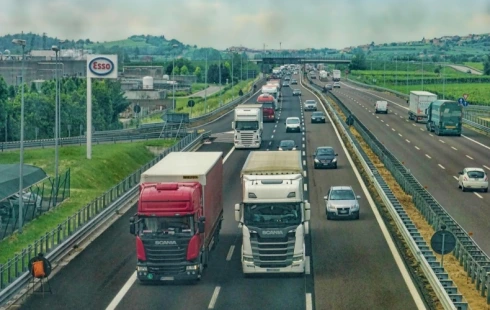
An idle truck never appears on the balance sheet as a loss, which is why so many hauliers underestimate it. New figures show the driver shortage is still widening, and the bill, from the national economy down to a single depot, is far larger than most operators realise.
Ask a transport manager what an unfilled driver vacancy costs, and the answer usually starts with recruitment fees. It should start somewhere else entirely. The lease on the tractor unit is still due. The insurance, vehicle tax and maintenance contracts still run. The parking bay is still paid for. The only thing that has stopped is the revenue.
In Part 1 of this series, we reported that Germany is short of more than 70,000 truck drivers. Here, we look at what that shortage is costing, and why, for many operators, the most expensive option is to wait.
The most thorough attempt to price the shortage came from a consortium study led by researchers from the University of St. Gallen spin-off Logistics Advisory Experts, TU Dresden and the Technical University of Applied Sciences Würzburg-Schweinfurt in Bavaria, backed by 16 companies and five industry associations. It calculated that the lack of drivers cost the German economy around €10 billion in 2022 alone.
The researchers identified 32 separate effects of the shortage, together responsible for an estimated three per cent rise in logistics costs. Those costs do not stay inside the transport industry. They are passed down the supply chain to manufacturers, retailers and, ultimately, consumers.
Since then, the picture has not improved. In January, the road haulage association BGL warned that around 30,000 to 35,000 drivers now retire every year, while only 15,000 to 20,000 newcomers join. In July, a study by KOFA, the German Economic Institute's centre for skilled labour, estimated that around 200,000 truck drivers will retire over the next 10 to 15 years.
At company level, the starting point is lost contribution margin: what each working truck earns above its running costs to cover overheads and profit. One recent industry worked example puts this at around €300 per productive day. Across a working year of around 220 days, that is more than €65,000 per truck, every year it stands idle.
Figures vary by fleet, but fixed costs continue whether or not the truck moves, and the rest of the fleet must carry them.
Behind the visible loss sits a chain of hidden costs that rarely appear under one heading:
• Overtime and burnout. Remaining drivers cover the gaps until fatigue sets in and they leave too. One industry analysis puts the cost of replacing a single departing driver at between €6,000 and €15,000 once recruitment, training, onboarding and downtime are counted.
• Subcontracting premiums. Loads passed to subcontractors or agency drivers usually cost more and earn less.
• Declined tenders. Every contract turned down for lack of capacity is revenue a competitor collects, often along with the customer.
• Compliance risk. Stretched rosters put pressure on drivers' hours and rest-time rules, and fines fall on the operator as well as the driver.
• Management time. Dispatchers spend their days juggling rosters instead of growing the business.
Consider an illustrative Bavarian haulier running 40 trucks with three seats unfilled. Using the industry example above, those three vehicles forgo around €198,000 in contribution over a year. If the extra overtime pushes one experienced driver to resign, add up to €15,000 more. Add a single regional contract declined for lack of capacity, and the total for one mid-sized depot can approach a quarter of a million euros, without a single line on the profit and loss statement labelled "driver shortage".
• Daily contribution. What does one working truck earn above its variable costs on an average day?
• Empty seats. Multiply by the number of unfilled positions and around 220 working days.
• Turnover. Add the cost of every driver who left last year, including recruitment, training and lost days.
• Lost business. Add the margin on any tender declined or load subcontracted for lack of drivers.
The industry is not short of ideas. Associations are pressing for cheaper, faster licence training, better rest facilities and improved working conditions to attract younger drivers. All of these matter, but they take years to change the numbers. Automation offers no near-term relief either: the consortium study's experts do not expect fully driverless trucks until around 2040.
That leaves international recruitment as the fastest lever available, and the international road transport union IRU has itself called for easier market access for drivers from countries with a surplus. The difficulty is execution. Licence conversion, the Code 95 professional qualification, visas, language and relocation each carry their own delays, and a hire that fails in the first months turns an investment into another cost.
This has given rise to specialist recruiters that manage the entire process rather than simply supplying candidates. One of them is Code 95 Plus, the logistics division of international recruitment group Takt Group, which sources experienced drivers in Southeast Asia and other markets for European operators.
“Operators don’t need more CVs. They need a driver who is licensed, qualified, speaks enough German to do the job and is still with them a year later,” says Dominik Weil, business development manager at Code 95 Plus. “That is what we manage, from the first interview in the driver’s home country to the first weeks on the road in Germany.”
Its approach targets the costs described above. Drivers are recruited with verifiable heavy-vehicle experience, so they become productive sooner than new trainees. Licensing, the Code 95 qualification, visas, documentation and relocation are handled on the operator's behalf, removing the administrative burden from managers. Drivers are trained in EU driving-time and tachograph rules before their first shift, reducing compliance risk. And to address the fear of a failed hire, Code 95 Plus provides a replacement if a driver does not work out during the six-month probation period.
Retention, the costliest problem of all, is tackled before arrival. Code 95 Plus works with language-training specialist Auxila to prepare drivers in practical, job-specific German and German working culture. Drivers who can communicate and settle are far more likely to stay, and every driver who stays avoids a replacement bill of up to €15,000.
For operators, the arithmetic is straightforward. A truck that is driving earns. A truck that is waiting costs. The question is how long a business can afford to wait.
Next in Germany's Empty Seats: for years, Eastern Europe kept German trucks moving. Why that pipeline is drying up, and what it means for operators who still depend on it.
About Code 95 Plus: Code 95 Plus is the logistics division of Takt Group, an international recruitment company operating across Europe and Southeast Asia. It recruits, qualifies and relocates professional drivers from outside the EU for European transport operators, with language and integration training delivered by its partner Auxila. Email: contact@code95plus.com
Image by Schwoaze from Pixabay
Section: News

Section: Politics

Section: Business
Section: Politics

Section: News

Section: Politics

Section: Travel

Section: News

Section: News

Section: Science
Both private Health Insurance in Germany and public insurance, is often complicated to navigate, not to mention expensive. As an expat, you are required to navigate this landscape within weeks of arriving, so check our FAQ on PKV. For our guide on resources and access to agents who can give you a competitive quote, try our PKV Calculator.
Germany is famous for its medical expertise and extensive number of hospitals and clinics. See this comprehensive directory of hospitals and clinics across the country, complete with links to their websites, addresses, contact info, and specializations/services.
Didn't manage to get a ticket for Linkin Park? Or still not enough after the concert? Join us at CRASH on June 12th for our "IN THE END" Linkin Park Special + CORE NIGHT.All night long, we'll be playing Linkin Park's music, along with Nu Metal, Metalcore, and Alternative Rock from bands such as Limp...



No comments yet. Be the first to comment!