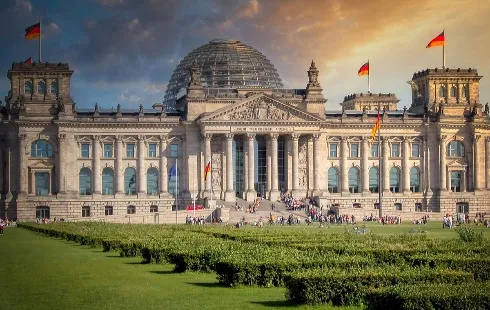
Government Coalition Maintains Stability After Public Disagreement
Section: Politics
 Every November, the fashion industry braces for one of its most profitable and paradoxical, moments of the year: Black Friday. What was once a single day of discounts meant to clear stock has become a global shopping ritual, stretching across weeks and encouraging a level of consumption that increasingly collides with the industry's attempts to position itself as responsible and forward-thinking.
For fashion, Black Friday is both a commercial lifeline and a mirror reflecting uncomfortable truths. The avalanche of promotions, "limited-time" offers, and countdown banners fuels an urgency that often bears little connection to genuine need. Instead, it taps into a cycle in which fast fashion thrives: low prices, speed, and volume. Brands release new collections at breakneck pace, and Black Friday only accelerates this rhythm, rewarding quantity over longevity.
The tension is impossible to ignore. On unboxing videos and social media hauls, shoppers celebrate bargains, while sustainability reports and climate targets warn of the long-term cost of overproduction. It's a contrast that neatly encapsulates the dilemma facing fashion today: how to maintain growth while addressing environmental impact and encouraging more mindful consumption.
Fast fashion brands remain the most aggressive players in this landscape. By pushing garments designed for short-term use, they feed a pattern of buying that peaks during the Black Friday season. Their business model depends on rapid turnover, and deep discounting reinforces the idea that clothes are disposable items to be worn a handful of times before being replaced by the next trend.
Yet, something is shifting. This year, several mid and high-end labels have chosen to reduce their participation or reframe their approach, offering repairs instead of discounts, spotlighting timeless pieces, or donating a portion of sales to environmental initiatives. It's a small but notable sign of an industry attempting to evolve without rejecting the commercial momentum that sustains it.
Consumers, too, appear more divided than ever. The cost of living crisis has made discounts undeniably attractive, even necessary for some. But there is a growing awareness, especially among younger shoppers, of the impact of impulse driven buying. Search data from second-hand platforms consistently rises during Black Friday week, suggesting that many people are looking for deals without contributing to new production. The resale market has become a kind of middle ground, offering affordability with a lighter ecological footprint.
Retail analysts note that the narrative around Black Friday is slowly expanding beyond "more for less." Shoppers are beginning to value quality, durability, and versatility, particularly in the apparel category. This mirrors a broader trend across the fashion industry, where consumers are increasingly drawn to investment pieces: coats with impeccable tailoring, knitwear built to last, bags designed to transcend seasons. The idea of "buying better" is no longer niche, it's pragmatic.
Still, the cultural force of Black Friday remains undeniable. It sets the tone for the holiday season, shapes retail strategies globally, and influences how people think about fashion consumption. The challenge is not to erase it but to rethink its meaning. If the industry continues to push for transparency, circularity, and longevity, Black Friday will eventually have to evolve with it.
For now, the contrast persists: a day that fuels both excitement and excess, a celebration of accessibility and a spotlight on systemic waste. Fashion sits at the crossroads, navigating the demands of commerce and the realities of its environmental footprint. How the industry chooses to balance those forces in the coming years may determine whether Black Friday continues as an indulgence; or becomes an opportunity for more thoughtful, purposeful style.
Section: Politics

Section: politics

Section: Business

Section: Health Insurance

Section: News

Section: Arts

Section: Arts

Section: Fashion

Section: Politics

Section: Fashion
Health Insurance in Germany is compulsory and sometimes complicated, not to mention expensive. As an expat, you are required to navigate this landscape within weeks of arriving, so check our FAQ on PKV. For our guide on resources and access to agents who can give you a competitive quote, try our PKV Cost comparison tool.
Germany is famous for its medical expertise and extensive number of hospitals and clinics. See this comprehensive directory of hospitals and clinics across the country, complete with links to their websites, addresses, contact info, and specializations/services.
Join us at the Kunstraum in der Au for the exhibition titled ,,Ereignis: Erzählung" by Christoph Scheuerecker, focusing on the captivating world of bees. This exhibition invites visitors to explore the intricate relationship between bees and their environment through various artistic expressions,...



No comments yet. Be the first to comment!