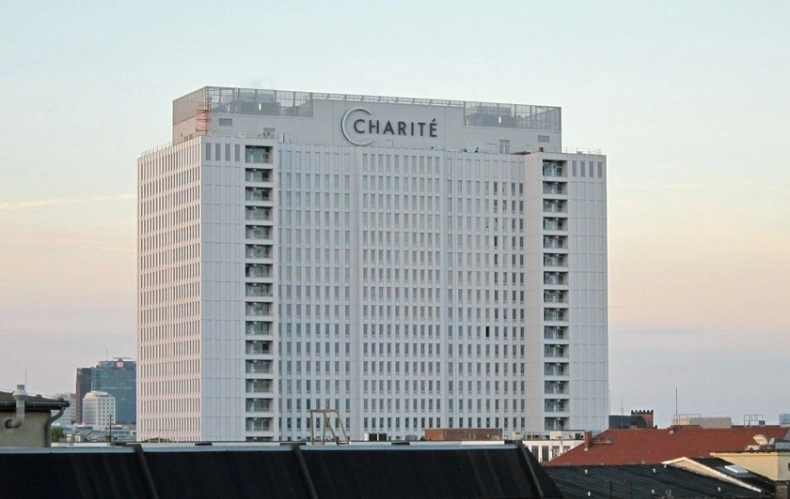
Nursing strike at Berlin's Charité hospital disrupts care beyond its own wards
Section: Health
Drivers in northern Berlin face years of disruption on the A114 city motorway after authorities confirmed a timeline for tearing down a bridge that engineers have deemed structurally unsound. The span, located in the Pankow district, will be demolished and rebuilt, with officials now able to say when work will begin and how long the project is expected to run.
The bridge has been flagged for years as being in poor structural condition, a status German transport authorities describe using the term marode, meaning dilapidated or in need of urgent repair. Rather than attempt a costly refurbishment, officials have opted for a full demolition and new construction, a route typically chosen when the underlying structure of a bridge has deteriorated beyond the point where repairs would be cost effective or guarantee long term safety.
For motorists who rely on the A114 to move through the north of the capital, the confirmation of a firm schedule ends a period of uncertainty over when construction crews would move in. The road has effectively been a long running construction site, with the bridge's condition forcing intermittent restrictions and raising questions about how long the crossing could remain in service without more invasive work.
Officials have now made clear that the demolition phase will be followed by a rebuilding period stretching over several years, meaning drivers should expect an extended stretch of lane closures, reduced speed limits and possible diversions on one of the key arteries linking districts in the north of Berlin. Projects of this scale on urban motorways typically require phased closures to keep some traffic moving while old structures are removed and replacement foundations and spans are put in place.
The A114 forms part of Berlin's wider motorway network, connecting areas in the north of the city and serving as a route used daily by commuters, commercial traffic and residents travelling between Pankow and neighbouring districts. Any prolonged closure or capacity reduction on the route is expected to have knock on effects for traffic on nearby roads, as drivers seek alternative routes during the construction period.
Authorities overseeing the project have not disguised the scale of the undertaking, acknowledging that replacing a motorway bridge of this kind cannot be done quickly without compromising safety standards. Bridge replacement projects on German motorways generally involve multiple stages, starting with the demolition of the existing structure, followed by groundwork, the construction of new piers and foundations, and finally the installation and connection of the new bridge deck to the surrounding roadway.
Local residents and regular commuters in Pankow have already experienced disruption linked to the bridge's deteriorating condition in recent years, as engineers imposed interim restrictions to keep the crossing usable while a long term solution was worked out. The confirmation of a firm demolition and rebuilding timetable is intended to give drivers, businesses and public transport operators clarity to plan around the coming disruption rather than face further delays in scheduling.
Officials have indicated that updates on specific lane closures, detour routes and any temporary traffic measures will be communicated as the demolition date approaches, allowing commuters time to adjust their routines. Projects of this nature are typically coordinated with regional transport bodies to minimise the impact on surrounding roads, although some disruption to daily commutes in the area is considered unavoidable once heavy machinery and construction crews move onto the site.
The A114 bridge replacement adds to a broader pattern across Germany's motorway network, where ageing infrastructure built decades ago is increasingly reaching the end of its structural lifespan. Transport authorities across the country have flagged a growing number of bridges requiring either major refurbishment or full replacement, citing increased traffic loads and the natural ageing of concrete and steel structures built in earlier decades.
For now, attention in Pankow turns to the practical consequences of the coming works, as residents and commuters brace for a construction period that officials say will last several years before the new bridge is completed and normal traffic flow on the A114 can resume.
Section: Health

Section: News

Section: Travel

Section: Travel

Section: Travel

Section: Travel

Section: Travel
Section: Travel

Section: Travel

Section: Travel
Both private Health Insurance in Germany and public insurance, is often complicated to navigate, not to mention expensive. As an expat, you are required to navigate this landscape within weeks of arriving, so check our FAQ on PKV. For our guide on resources and access to agents who can give you a competitive quote, try our PKV Calculator.
Germany is famous for its medical expertise and extensive number of hospitals and clinics. See this comprehensive directory of hospitals and clinics across the country, complete with links to their websites, addresses, contact info, and specializations/services.
Didn't manage to get a ticket for Linkin Park? Or still not enough after the concert? Join us at CRASH on June 12th for our "IN THE END" Linkin Park Special + CORE NIGHT.All night long, we'll be playing Linkin Park's music, along with Nu Metal, Metalcore, and Alternative Rock from bands such as Limp...


No comments yet. Be the first to comment!