 See our
How to Get Your Carte Vitale in France: The Real Timeline for New Residents
Section: Health
If you've lived in France for years, paid taxes, raised kids in the local school and still can't vote for the mayor deciding your street's next renovation, you're not missing something that's simply how French election law works for most foreign residents. The rules are more specific, and more limited, than many newcomers assume, and they came within one vote of changing in early 2026.
Voting in French presidential and parliamentary elections is reserved exclusively for French citizens, full stop there is no residency-based exception regardless of how long someone has lived in the country. Municipal and European elections work differently. Citizens of other EU member states living in France can vote in both, on equal terms with French nationals, and can stand as municipal councillors. One limit surprises many EU nationals who do get involved locally: they cannot become mayor, since French law treats the position as representing the state itself, and they cannot sit in the National Assembly.
Non-EU citizens currently have no voting rights in any French election national, European or municipal no matter how long they've held residency.
This split dates back to the Maastricht Treaty, which created EU citizenship and, with it, the right of EU nationals to vote and stand in local and European elections anywhere in the bloc. France implemented that obligation for EU citizens but has never extended equivalent rights to non-EU residents, despite the idea resurfacing repeatedly in French politics for more than four decades. It appeared as a campaign pledge from François Mitterrand ahead of his 1981 election, was raised again by Nicolas Sarkozy in 2004, and returned once more under François Hollande's 2012 campaign.
Each attempt stalled amid consistent opposition, primarily from the right and far right, built on a specific constitutional argument rather than simple resistance to change: that voting is an expression of national sovereignty, and that French citizenship obtainable through naturalization after a legal residence period, itself a deliberate and demanding process is the mechanism through which someone formally joins that political community. Under this view, extending voting rights to non-citizens would decouple political participation from citizenship itself, a link opponents argue is foundational to how the French Republic defines belonging, and one that should be earned through naturalization rather than granted through residence alone. Some opponents have also pointed to reciprocity concerns, questioning whether France should extend local voting rights to nationals of countries that do not offer equivalent rights to French citizens living abroad.
Supporters of extending the right counter that long-term residents pay local taxes, use local services, and are directly affected by municipal decisions regardless of citizenship status, and that several other EU countries including Belgium, Luxembourg and Portugal, among others with varying conditions already extend local voting rights to some non-EU residents without the sovereignty concerns opponents describe materializing in practice.
The debate came back with real momentum in early 2026, when a constitutional bill to extend municipal voting rights to non-EU residents advanced through a National Assembly committee. Amending the French constitution, however, requires either a three-fifths supermajority across both houses of parliament sitting jointly, or approval through national referendum a considerably higher bar than passing an ordinary law. Neither threshold was met, and the bill did not pass.
As a direct consequence, the municipal elections held in March 2026 proceeded under the existing framework, and hundreds of thousands of non-EU residents across France were unable to cast a ballot a point that election-monitoring groups and residents' advocacy organizations raised publicly at the time.
Public opinion on this question doesn't split cleanly along the usual left-right line. Survey data on the issue going back to the 1990s has generally found majority support for extending municipal voting rights to non-EU residents once respondents are reminded that EU nationals already have that right in France — but that support drops noticeably when the same question is asked without that context. How the question is framed appears to matter almost as much as the underlying opinion itself, a pattern researchers studying the issue have noted across multiple survey cycles.
For EU citizens settled in Paris long-term, registering to vote in municipal elections is a genuine, if limited, way to have input on decisions that shape daily life housing policy, local transport, school catchment areas. Non-EU residents don't have that option through the ballot box for now, but nothing in French law prevents attending public municipal council sessions, joining a local association, or raising concerns directly with an elected councillor all of which remain open to any resident of a commune, regardless of nationality, and are, in practice, how a fair amount of local advocacy in France actually happens outside the voting booth.
This article presents the current legal framework, the arguments raised on both sides of the debate, and recent legislative history, without taking an editorial position on whether voting rights should be extended. The comparative reference to other EU countries' practices is included for context on how the debate is framed internationally, not as an argument for or against reform in France.
Sources: Service-Public.fr, the French government's official information portal; reporting from The Connexion and The Local France on the 2026 constitutional reform process and municipal elections.
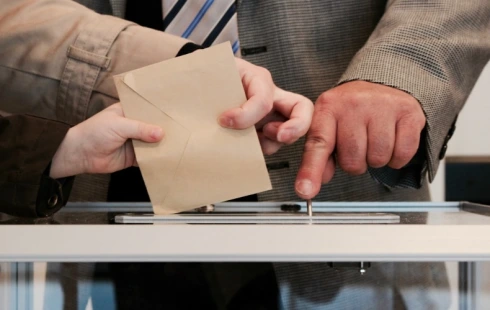
Photo by Arnaud Jaegers on Unsplash
Section: Health
Section: Politics

Section: Science

Section: Business

Section: News

Section: Arts

Section: Travel

Section: Fashion

Section: Health
Section: Politics
Both private Health Insurance in Germany and public insurance, is often complicated to navigate, not to mention expensive. As an expat, you are required to navigate this landscape within weeks of arriving, so check our FAQ on PKV. For our guide on resources and access to agents who can give you a competitive quote, try our PKV Calculator.
Germany is famous for its medical expertise and extensive number of hospitals and clinics. See this comprehensive directory of hospitals and clinics across the country, complete with links to their websites, addresses, contact info, and specializations/services.
Didn't manage to get a ticket for Linkin Park? Or still not enough after the concert? Join us at CRASH on June 12th for our "IN THE END" Linkin Park Special + CORE NIGHT.All night long, we'll be playing Linkin Park's music, along with Nu Metal, Metalcore, and Alternative Rock from bands such as Limp...



No comments yet. Be the first to comment!